Why do horses wear blinders?
The short answer
Horses wear blinders (blinkers) to hide part of their view behind and to the side, so they attend to what is ahead. Racehorses wear them to stay on task in a race; carriage and harness horses wear them so the vehicle behind them is out of sight. The forward view stays open.
What are horse blinders?
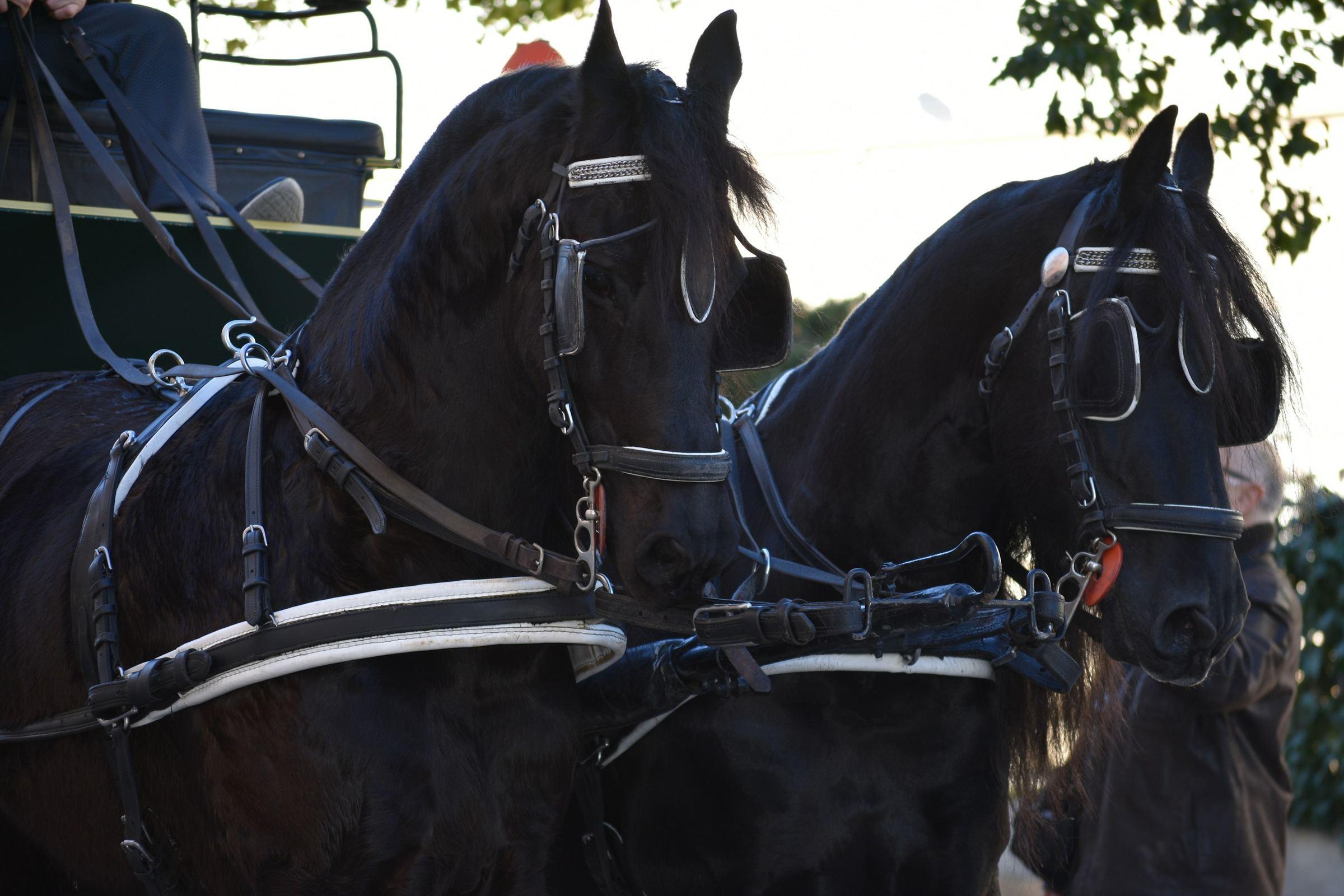
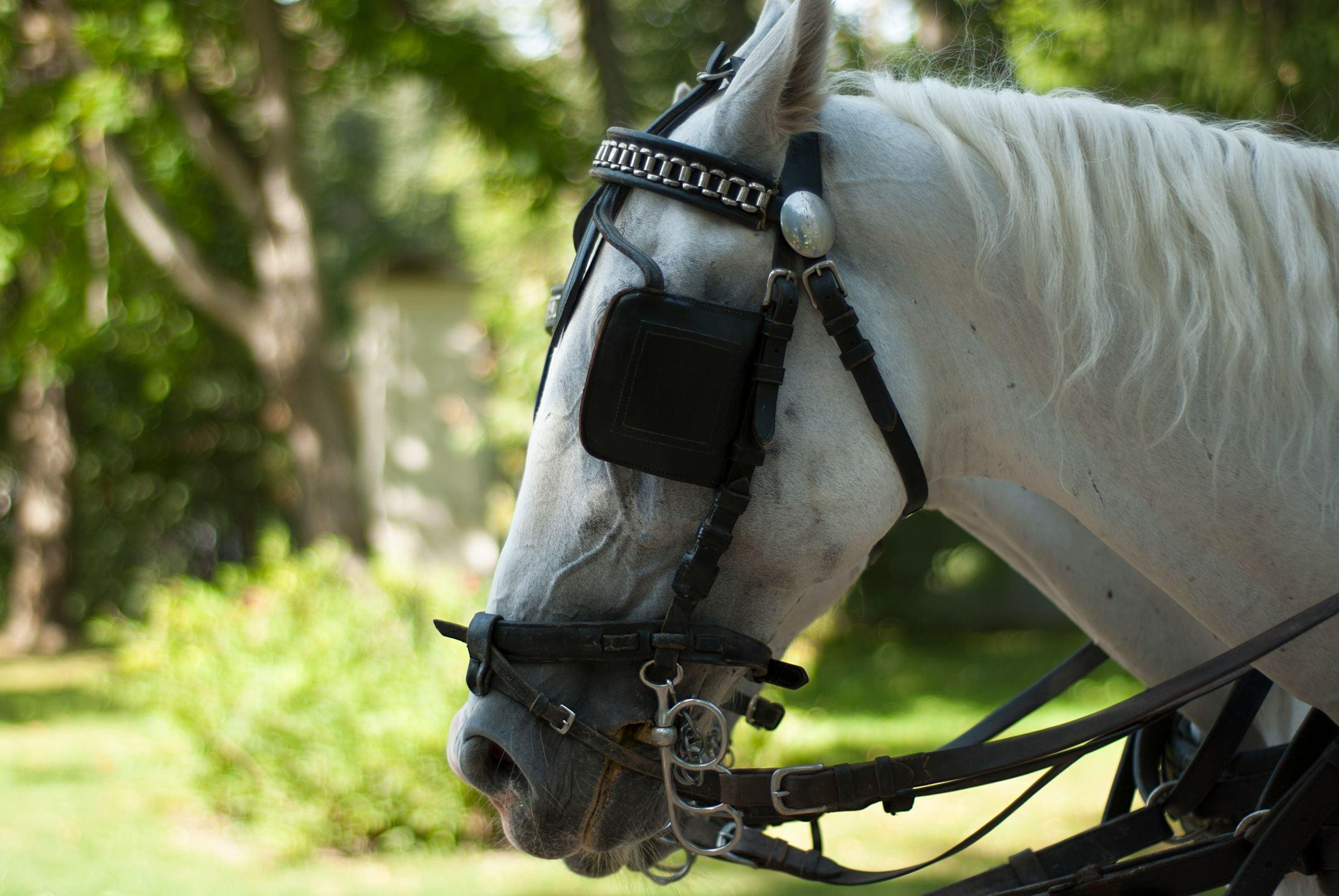
Horse blinders, called blinkers in Britain, are cups or flaps placed beside a horse’s eyes to block part of its view to the rear and side. On a racehorse they are plastic cups sewn into a fabric hood; on a driving horse they are leather plates fixed to the bridle’s cheekpieces.
The same tack goes by several names. Driving people say blinkers, blinds or winkers; American racing and everyday speech say blinders. Wikipedia’s entry, citing the Oxford English Dictionary, treats them as one piece of equipment. See the glossary for every variant.
Why do horses wear blinders?
To reduce distraction. America’s Best Racing explains that some racehorses are easily distracted, and blinkers stop them seeing what is behind or beside them in a race. Driving horses wear them so the vehicle, wheels and driver behind them stay out of sight while they work.
- 1Attention in a race
Trainers add blinkers to help a horse with early speed break sharply, or to help a closer settle and focus on the horses ahead (America’s Best Racing).
- 2Young, green horses
A trainer quoted by the Retired Racehorse Project says young horses are easily distracted and can start in blinkers and grow out of them.
- 3The vehicle behind
On a driving bridle, blinkers keep the carriage or cart out of view. In Britain they are traditional, though not compulsory, even in combined driving.
- 4Partial screening
Lighter relatives such as cheekpieces and visors screen less than full cups. Compare them in visors, cheekpieces and more.
How do blinkers work with a horse's eyes?
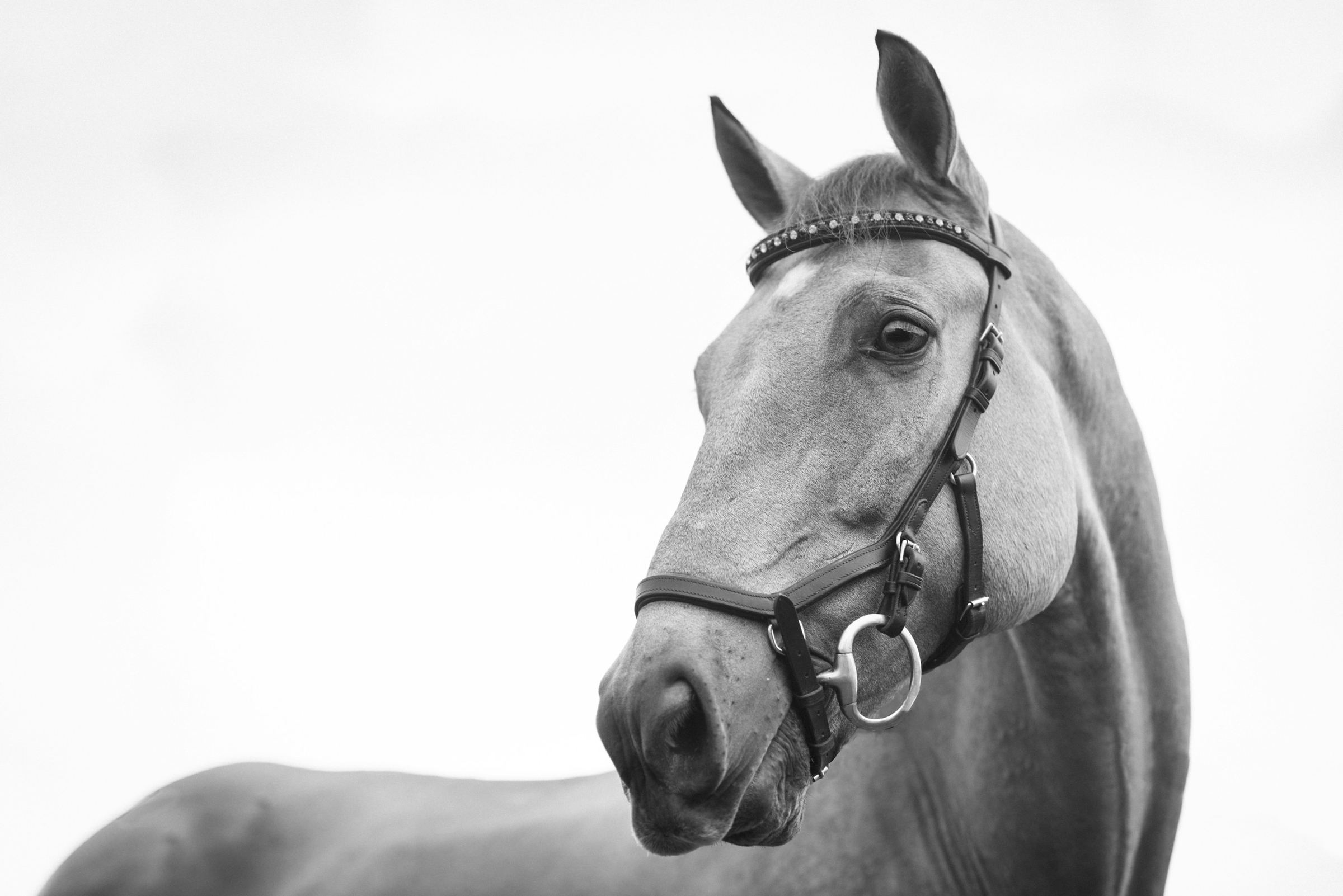
A horse’s eyes sit on the sides of its head, giving it almost a full circle of view: about 65 degrees in front with both eyes and 146 degrees to each side with one eye, per the AAEP. Blinkers close the rear part of each side’s view, leaving the front open.
That wide, mostly one-eyed view is good at catching movement. The University of Kentucky’s extension guide notes that horses detect movement well and often turn toward something to look at it with both eyes, and that the switch can cause a startle. Narrowing the side and rear view removes some of those triggers. The how horses see guide covers the eye itself.
Which horses wear blinders?
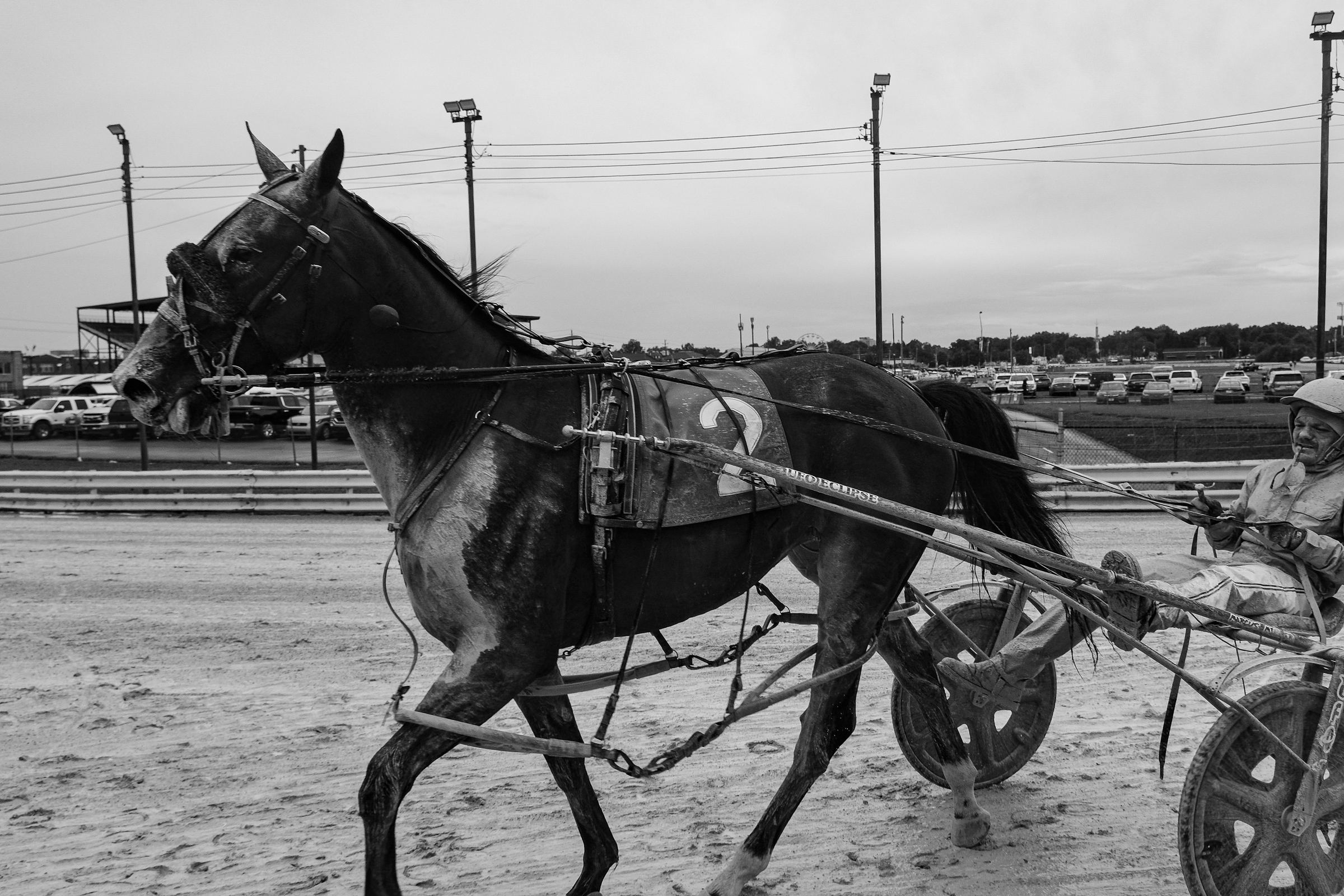
Mainly racehorses, harness racehorses and driving horses. Blinkers are a normal part of carriage and harness tack and are common in Thoroughbred racing, but they are rarely used in riding, and most ridden disciplines outside racing do not permit them at all.
In racing, wearing blinkers is declared and shown on the racecard (see racing blinkers). On the road and in the show ring, they are part of the driving bridle (see driving blinkers).
When do blinkers not help a horse?
When the horse goes worse in them. America’s Best Racing points out that blinkers added to a racehorse can be taken off again if they seem to hinder it, and Ontario Racing notes many bettors watch “blinkers off” closely. Some horses simply prefer seeing their rivals.
The field of view visualiser lets you close the circle cup by cup, on one side or both, to see what each type takes away.
Frequently asked questions
Yes. Blinders are built to leave the view ahead open and to take away only part of the view behind and to the side. Even the deepest racing cup keeps the forward field clear, and a visor keeps a slit of side view as well.
No. A horse in a field with something over its eyes is usually wearing a fly mask: light mesh it sees through, worn to keep insects off the face. Blinders are solid cups or plates meant to narrow the view, and they are working tack, not field wear.
They can reduce what a horse sees behind and beside it, which is why driving horses traditionally wear them, but they do not make a horse unspookable. A horse can still hear, smell and feel, and it can still react to anything that appears in front of it.
Blinkers leave the forward view open and, fitted well, do not touch the eye. Their welfare depends on fit, on how they are introduced and on the horse. Several sources note that some horses go better without them, so trainers take them off when they do not help.
A carriage horse has a vehicle right behind it, and blinkers keep the cart, wheels and whip out of its view. Riders sit on the horse and steer it with their legs and seat, so blinkers are rarely used in riding and are not allowed in most ridden competitions.
Sources
- 01Back to Basics: Foundational Clinical Skills for Equine Practice (vision and ocular reflexes)AAEP Proceedings, Vol. 68, 2022
- 02Assessment of vision and common eye problems in horsesCornell University College of Veterinary Medicine, May 15, 2023
- 03Horse Vision (Ashley Griffin, University of Kentucky)Extension Horses (horses.extension.org), July 31, 2019
- 04Blinkers (horse tack)Wikipedia
- 05Horse Racing Explained: What Are Blinkers?America's Best Racing
- 06What Racehorses Wear (Tracy Gantz)Retired Racehorse Project, Off-Track Thoroughbred Magazine, Fall 2018
- 07Jargon Buster: horse racing termsGreat British Racing
- 08Do You Have To Use Blinkers When Driving Your Horse?Harness Stuff (UK driving retailer)
- 09Changing Things Up: Deciphering Equipment Changes (Jennifer Morrison)Ontario Racing, August 26, 2023
Checked . Rules, products and stock change, so confirm with the racing authority, the maker or the shop. We are independent and not paid by anyone named. Read the disclaimer or how we check facts.
Related guides
 UnderstandHow horses seeAlmost a full circle, a narrow band of depth, and two small blind spots.Read the guide
 UnderstandTypes of blinkersFull, half and French cups, and the driving blinker, side by side.Read the guide
- Tools & moreField of view visualiserTurn the dial and watch each cup close part of the circle.Read the guide