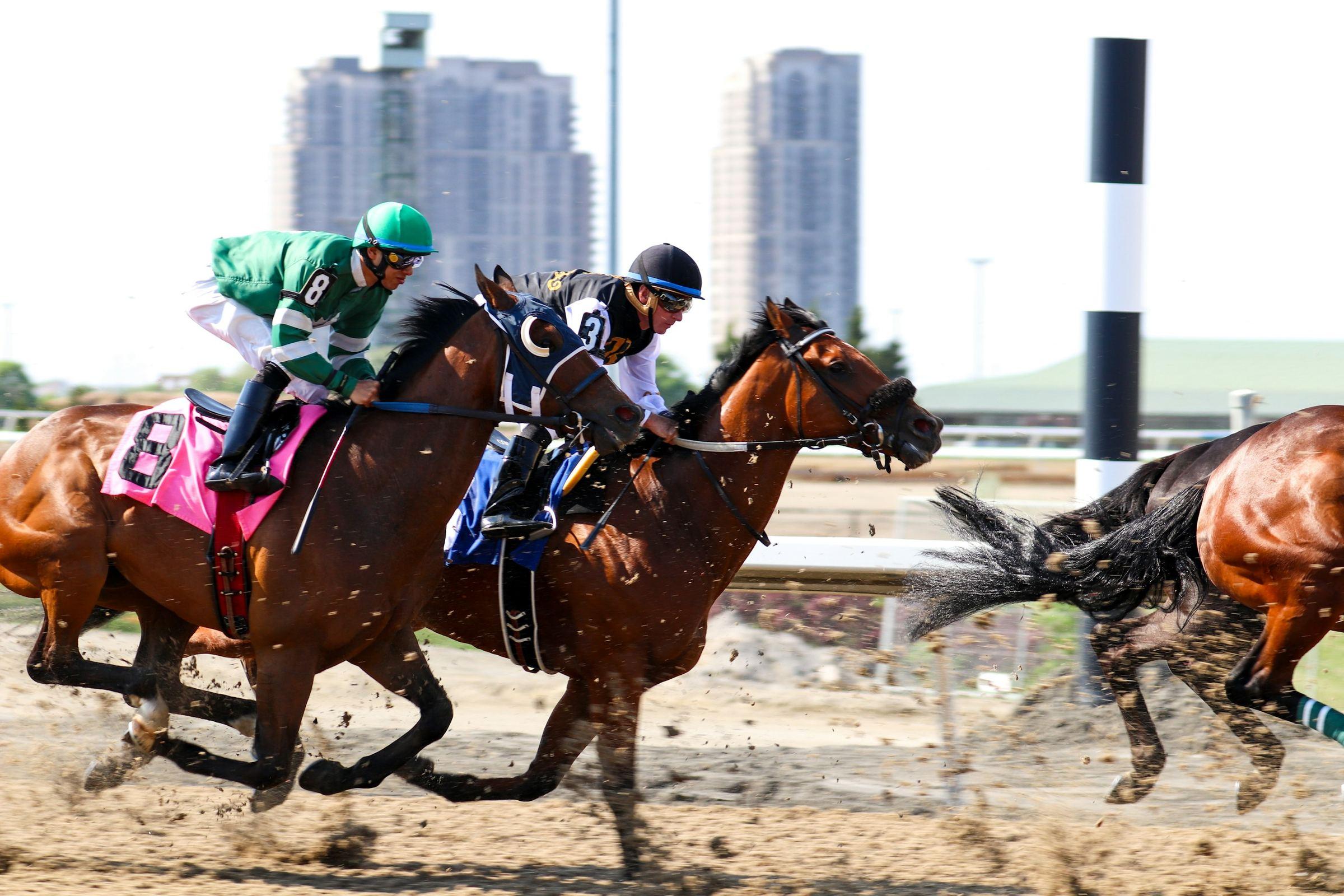
Racing blinkers: hoods, equipment changes and rules
The short answer
Racing blinkers are plastic cups sewn into a fabric hood worn under the bridle. Trainers use them to help an easily distracted horse concentrate, and take them off if they don’t help. Adding or removing them is an equipment change: approved by stewards in US states, declared and printed on the racecard in Britain.
What are racing blinkers?
A blinker hood: a close-fitting fabric hood with a plastic cup at each eye, worn under the bridle. America’s Best Racing notes the cups can be cut to various lengths, so a trainer can restrict as much or as little of the rear and side view as a horse needs.
Hoods come in knit, mesh and silk, with full, French or extended cups, with or without ears, from makers such as Jacks and Finish Line of Oklahoma (see where to buy). For how the cups differ, see types of blinkers.
Why do trainers put blinkers on a racehorse?
To help it concentrate. America’s Best Racing says trainers use blinkers on horses that are easily distracted, to help a speed horse break sharply and set the pace, or to help a closer relax early and focus on the horses ahead of it.
Trainer Peter Eurton told the Retired Racehorse Project he estimates about 40 percent of his own horses run in blinkers, that young horses especially are easily distracted, and that some “start out in blinkers and grow out of it.” That is one trainer’s stable, not a statistic for racing as a whole.
Who approves a blinker change in US racing?
The stewards, under the state’s racing rules. Illinois’s rule, for example, says permission for a horse to wear blinkers, or to stop wearing them, must be approved by the starter before the stewards grant it, and the request is made at entry.
The change is then published for bettors: Ontario Racing explains that equipment changes appear as notations on the entry and on the horse’s record, such as “blinkers on”. The federal Horseracing Integrity & Safety Authority (HISA) runs the Racetrack Safety Program’s Rule 2200 series; we did not find a HISA rule that deals with blinkers specifically, so we don’t quote one. Check your state racing commission’s rules.
| Where | What the rule or guide says | Source |
|---|---|---|
| Illinois, US | Wearing or removing blinkers needs the starter’s approval, then the stewards’ permission; request at entry | Ill. Admin. Code 11, §1415.280 |
| Britain | Headgear (except nosebands) declared at the final declaration stage, worn to the start and in the race | British Racecourses guide; Great British Racing |
| Ireland | Since 3 December 2012 trainers declare the exact headgear: blinkers, eyecover, eyeshield, hood or visor | IHRB |
| Australia | A two-year-old or unraced horse must trial in blinkers to the stewards’ satisfaction first | National Equipment Register |
| New Zealand | Full and half cups permitted; worn under the bridle; may be used with a shadow roll | NZTR gear register |
How are blinkers declared in British and Irish racing?
With the runner. Great British Racing explains that blinkers are shown as b next to the horse’s weight, and b1 marks the first time. Declared headgear must then be worn to the start and in the race. In Ireland, trainers declare the exact headgear type.
Read the full notation, including v1 and t1, in first-time blinkers.
What do Australian and New Zealand rules say about blinkers?
Both regulate them as listed gear. Australia’s National Equipment Register sets specifications and requires a two-year-old or unraced horse to trial in blinkers before racing in them. New Zealand’s register permits full and half cups, worn under the bridle, and allows them with a shadow roll.
Racing rules are amended often. This page summarises what the linked documents said on the date shown under Sources. Always read the current rulebook of the authority you race under.
Frequently asked questions
Because many do not need them, and some run worse in them. Blinkers suit a horse that is distracted or looks around; a horse that already concentrates gains nothing, and a horse that needs to see its rivals can lose interest. Trainers decide horse by horse.
Not by themselves. They are meant to help a distracted horse concentrate, and trainers say horses in them sometimes show more early speed. Others run worse and have them taken off. We do not quote win-rate figures, because they vary by trainer, track and period.
Rules differ by jurisdiction. In the US, state rules such as Illinois's require blinker changes to be approved by the starter and granted by the stewards, with requests made at entry. In Britain, headgear is declared with the runner and must then be worn.
On a British racecard, b means the horse wears blinkers and b1 means it is wearing them in a race for the first time. Visors are v and v1. See the first-time blinkers guide for the full notation.
Sources
- 01Horse Racing Explained: What Are Blinkers?America's Best Racing
- 02What Racehorses Wear (Tracy Gantz)Retired Racehorse Project, Off-Track Thoroughbred Magazine, Fall 2018
- 03Blinkers (horse tack)Wikipedia
- 04Ill. Admin. Code tit. 11, § 1415.280 (blinkers)Illinois Racing Board rules
- 05Proposed redline changes to Racetrack Safety 2200 SeriesHorseracing Integrity & Safety Authority
- 06Changing Things Up: Deciphering Equipment Changes (Jennifer Morrison)Ontario Racing, August 26, 2023
- 07Jargon Buster: horse racing termsGreat British Racing
- 08Horse racing headgearBritish Racecourses (independent racing guide)
- 09Declaration of HeadgearIrish Horseracing Regulatory Board
- 10National Equipment RegisterRacing Australia, via Racing NSW, March 22, 2022
- 11Register of Notifiable GearNew Zealand Thoroughbred Racing, May 2023
Checked . Rules, products and stock change, so confirm with the racing authority, the maker or the shop. We are independent and not paid by anyone named. Read the disclaimer or how we check facts.
Related guides
- Race & driveFirst-time blinkersBlinkers on, blinkers off, b1 and v1: the notation, decoded.Read the guide
 UnderstandVisors, cheekpieces & moreSeven pieces of headgear that look alike and do different jobs.Read the guide
 Race & driveDriving & harness blinkersSquare plates on carriage bridles, sliding blinds on the trotting track.Read the guide